Erythritol vs Jaca Rare Sugar

Erythritol Concerns Jaca Rare Sugar Benefits
CAUSES HEART ATTACKS, STROKES & THROMBOSIS Jaca: Diabetic & Keto Friendly
May cause brain dysfunction Jaca: 90% fewer calories than sugar
High in FODMAPS — causes digestive issues like IBS Jaca: FDA GRAS certified
May have adverse metabolic and endocrine effects Jaca: NON-GMO & 100% natural
Has a "cooling" effect in the mouth Jaca: Zero glycemic impact
Sugar Alcohol — not a natural product Jaca: FODMAP friendly — no digestive issues
Can raise blood sugar levels in diabetics Jaca: Zero aftertaste — tastes like real sugar
May cause infertility Jaca: Activates GLP-1 for appetite control
May cause autoimmune problems Jaca: Safe for the whole family
May cause faulty insulin regulation Jaca: Burns belly fat (activates CPT-1/CPT-2)
AFTERTASTE Jaca: Browns and caramelizes like sugar

*Based upon research and belief - DO YOUR OWN RESEARCH

Rare Sugar • Diabetic & Keto Friendly

Know Your Ingredients: A Guide to Healthier Sweetening

Choosing the right sweetener can be confusing with so many options available. Understanding the differences helps you make the best choice for your health goals and taste preferences.

90%
Fewer Calories
Low
FODMAP
Real
Caramelization
FDA
GRAS Status
"
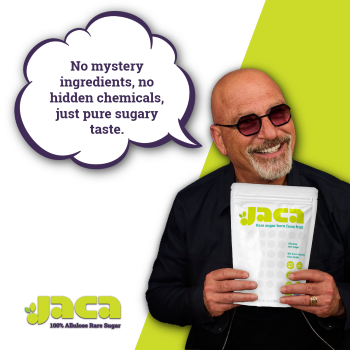
Howie Mandel with Jaca Sugar
No mystery ingredients, no hidden chemicals, just pure sugary taste.
Howie Mandel

Understanding Allulose vs Erythritol

Each sweetener has unique properties — from taste profile and calorie content to how they perform in cooking and baking. Some work better in coffee, others excel in baked goods. Let's break down the key differences.

Pro Tip

When switching sweeteners, start with small amounts in familiar recipes to understand how each one affects taste and texture.

Why Jaca Allulose is the Best Choice

When it comes to sweeteners, quality matters. Jaca allulose stands apart with its exceptional purity and taste — no stinging, no waxy feel, no soapy aftertaste that plagues other brands.

Kosher & Halal Certified

Certified for religious dietary requirements

FDA GRAS Certified

Generally Recognized As Safe by the FDA

100% Vegan

Plant-based with no animal products

Dental Safe

Does not promote tooth decay like sugar

Explore our other guides on allulose, keto sweeteners, and sugar substitutes to learn more about sweetener options.

Frequently Asked Questions

Is Jaca allulose safe? +
Yes. Jaca allulose has FDA GRAS (Generally Recognized As Safe) status and has been safely used in Japan for over 30 years with extensive clinical research.
Does Jaca allulose taste like sugar? +
Yes — Jaca is 75% as sweet as the sugar we grew up with with zero aftertaste. It browns, caramelizes, and bakes exactly like traditional sugar.
Can diabetics use Jaca allulose? +
Absolutely. Jaca has zero glycemic impact and zero net carbs, making it ideal for blood sugar management.
Is Jaca allulose keto-friendly? +
Yes! With zero net carbs and zero glycemic index, Jaca fits perfectly into ketogenic and low-carb diets.
Does Jaca allulose cause digestive issues? +
No. Unlike sugar alcohols like erythritol or xylitol, Jaca allulose is FODMAP-friendly and doesn't cause bloating or GI distress.
How many calories does Jaca allulose have? +
Jaca has 90% fewer calories than sugar — just 0.4 calories per gram versus 4 calories for regular sugar.
Can I bake and cook with Jaca allulose? +
Yes! Jaca browns, caramelizes, and performs exactly like sugar in recipes. Use a 1:1.25 ratio for equivalent sweetness.
Does Jaca allulose have any health benefits? +
Yes. Clinical studies show allulose activates GLP-1 (helping control appetite), blocks fat absorption, and supports metabolic health.
Where is Jaca allulose made? +
Jaca is made in the USA and is non-GMO, vegan, gluten-free, and kosher certified.

Ready for the Sugar You Should've Had All Along?

Join thousands who've made the switch to Jaca allulose.

Jaca Sugar

4801 Linton Boulevard, #11A PMB 624
Delray Beach, FL 33445

(786) 770-0727

info@jacasugar.com