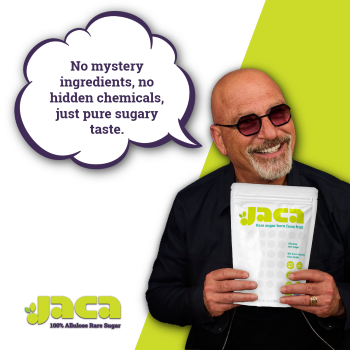
What Is Allulose?
For a long time, the sweetener game stayed the same. You had two choices: gum up your system with good ol' sucrose, or settle for one of those weird-tasting alternatives. Bummer or bummer. Those days are gone. Allulose is here.
Allulose is a rare sugar naturally found in small quantities in figs, raisins, and jackfruit. Unlike artificial sweeteners that try to mimic sugar, allulose IS sugar — just a rare form that your body processes differently. It delivers the sweet taste you love with about 90% fewer calories than the sugar we grew up with.
Pro Tip
Allulose is about 75% as sweet as old school sugar. When converting recipes, use 25% more allulose than traditional sugar for equivalent sweetness.
Why Choose Jaca Allulose?
Not all allulose is created equal. Some products sting your tongue. Others have a waxy feel and soapy taste. At Jaca, we obsess over purity because you deserve better.
| Sweetener | Taste | Calories | GI | Baking |
|---|---|---|---|---|
| Jaca Allulose | Like the sugar we grew up with | 0.4/g | 0 | Browns & caramelizes |
| The Sugar We Grew Up With | Sweet | 4/g | 65 | Yes |
| Stevia | Bitter aftertaste | 0 | 0 | No browning |
| Erythritol | Cooling effect | 0.2/g | 0 | Limited |
Key Benefits of Allulose
Kosher & Halal Certified
Certified for religious dietary requirements
Allergen Free
No starch, peanut, dairy, wheat, or yeast
FODMAP Friendly
No digestive distress like sugar alcohols
Keto, Paleo, Primal Friendly
Perfect for ancestral and low-carb diets
How to Use Allulose
The beauty of allulose is its versatility. Whether you're sweetening coffee, baking birthday cakes, or making homemade caramel sauce, allulose performs like sugar.
Beverages
Coffee, tea, smoothies — dissolves perfectly
Baking
Cookies, cakes, brownies — browns beautifully
Caramels & Sauces
Real caramelization for authentic results
Ice Cream
Prevents crystallization, stays scoopable
Explore our guides on stevia, erythritol, and monk fruit to see how they compare.